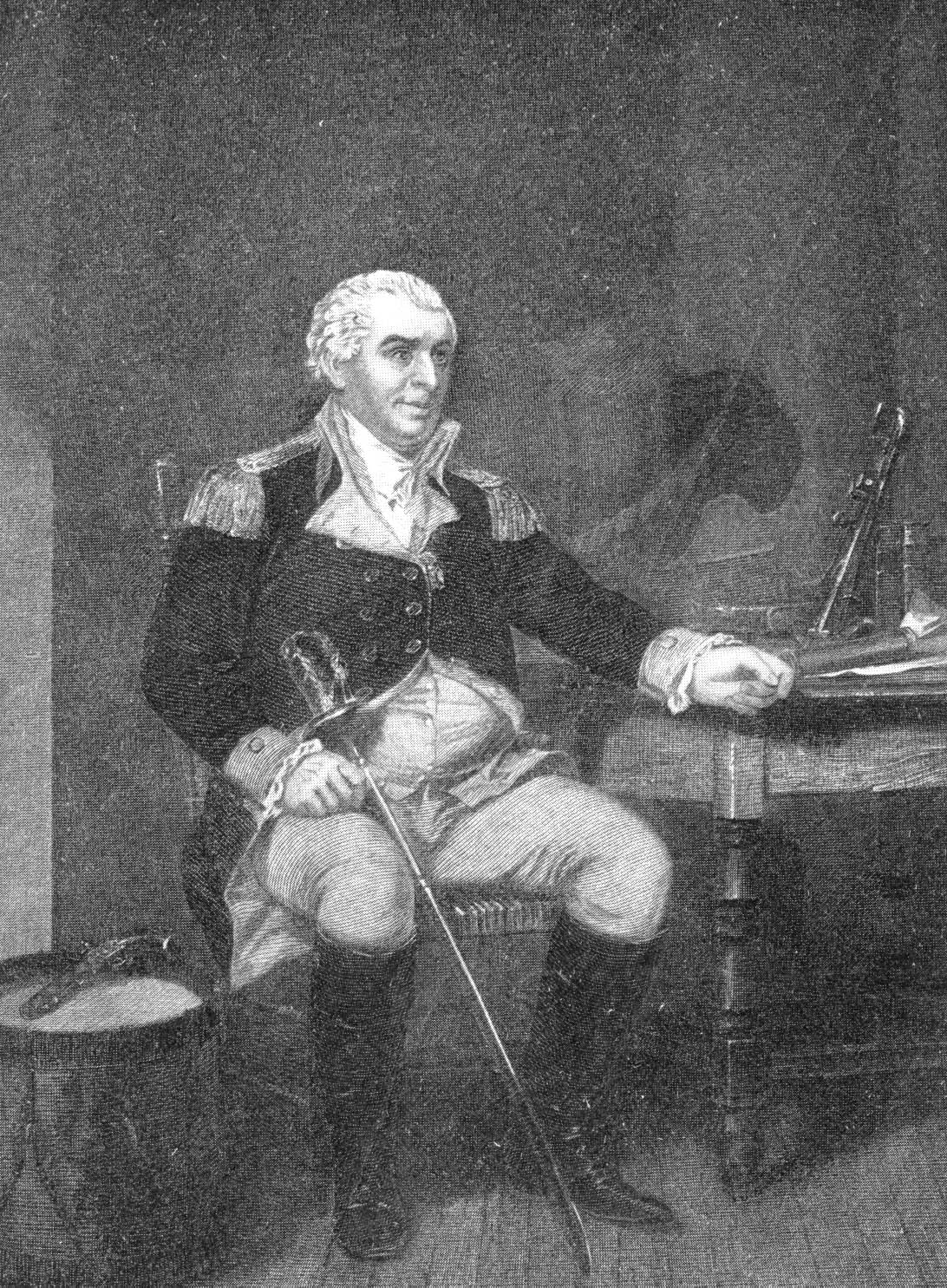
Engraving of John Barry, seated at desk in naval uniform with sword and sidearms, 1863
When we think of the American Revolution, names like Washington, Franklin, and Adams often come to mind. Yet among these towering figures stands a lesser-known but deeply significant hero: John Barry. An Irish-born immigrant and devout Catholic, Barry not only played a pivotal role in securing American independence at sea but also embodied the quiet resilience of Catholic contributions during a time when religious prejudice was still widespread in the colonies.
Born in County Wexford, Ireland, on March 25, 1745, Barry grew up in a world shaped by British rule and limited opportunities for Catholics. Like many Irish immigrants of his time, he sought a better life across the Atlantic, eventually settling in Philadelphia. There, he built a successful career as a merchant captain, earning a reputation for skill, discipline, and integrity. Barry was one of the earliest members of the Friendly Sons of Saint Patrick, a charitable organization that helped Irish immigrants when arriving to the colonies. With the outbreak of the Revolution, Barry quickly aligned himself with the Patriot cause. At a time when the Continental Navy was still in its infancy, his experience proved invaluable. Commissioned as a captain in 1775, Barry commanded several ships and became known for both his tactical ingenuity and his refusal to surrender—even when outmatched.
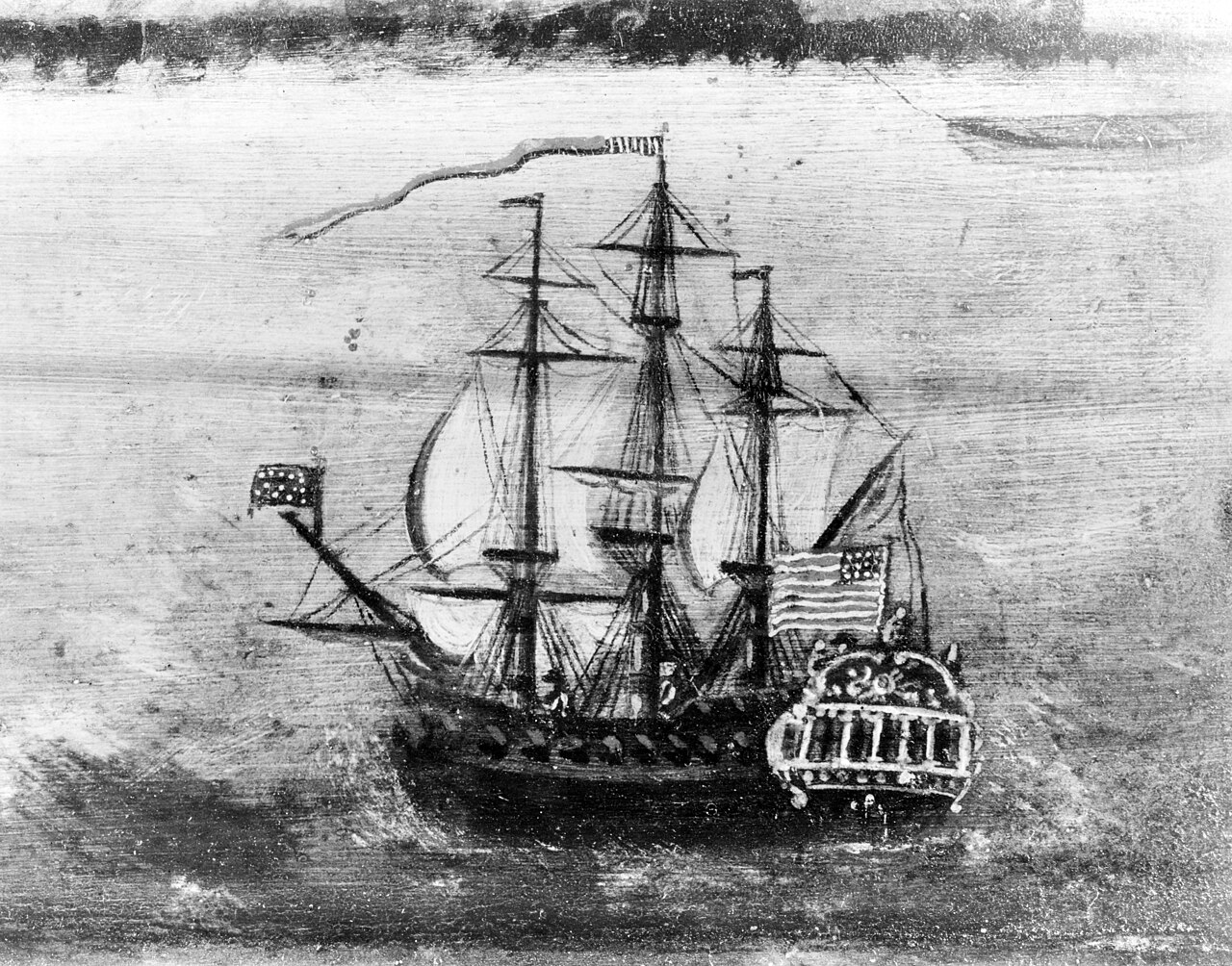
USS Alliance, taken a contemporary painting by Captain Matthew Parke, USMC, 1781
One of his earliest notable achievements came aboard the Lexington, where he captured the British ship Edward, marking one of the first American naval victories of the war. Throughout the conflict, Barry demonstrated a pattern of bold decision-making, often engaging stronger British forces and managing to escape—or even prevail—through superior seamanship. In 1780, Barry was given command of the thirty-six-gun Continental frigate Alliance. The ship was renowned as the finest in the nation. Over the next two and a half years, Captain Barry sailed to the waters off the western coast of Europe three times: the first in February 1781 to deliver John Laurens and Thomas Paine to France; the second in January 1782 to deliver LaFayette to France following the victory at Yorktown; and the third in August 1782 simply to hunt for British ships. In 1783, Barry and the Alliance were sailing from Havana, Cuba with 72,000 Spanish silver dollars to help pay off war debt. On March 10th, as the Alliance navigated the Florida coast, it encountered three British warships, including the frigate HMS Sybil. Despite being outnumbered, Barry engaged in a fierce battle to protect his crucial cargo. Although he sustained a shoulder wound, he remained on deck throughout the conflict. By nightfall, the Alliance managed to fight the British to a stalemate and successfully sailed northward, delivering all 72,000 silver dollars safely to port. This would be the last naval battle of the American Revolution.
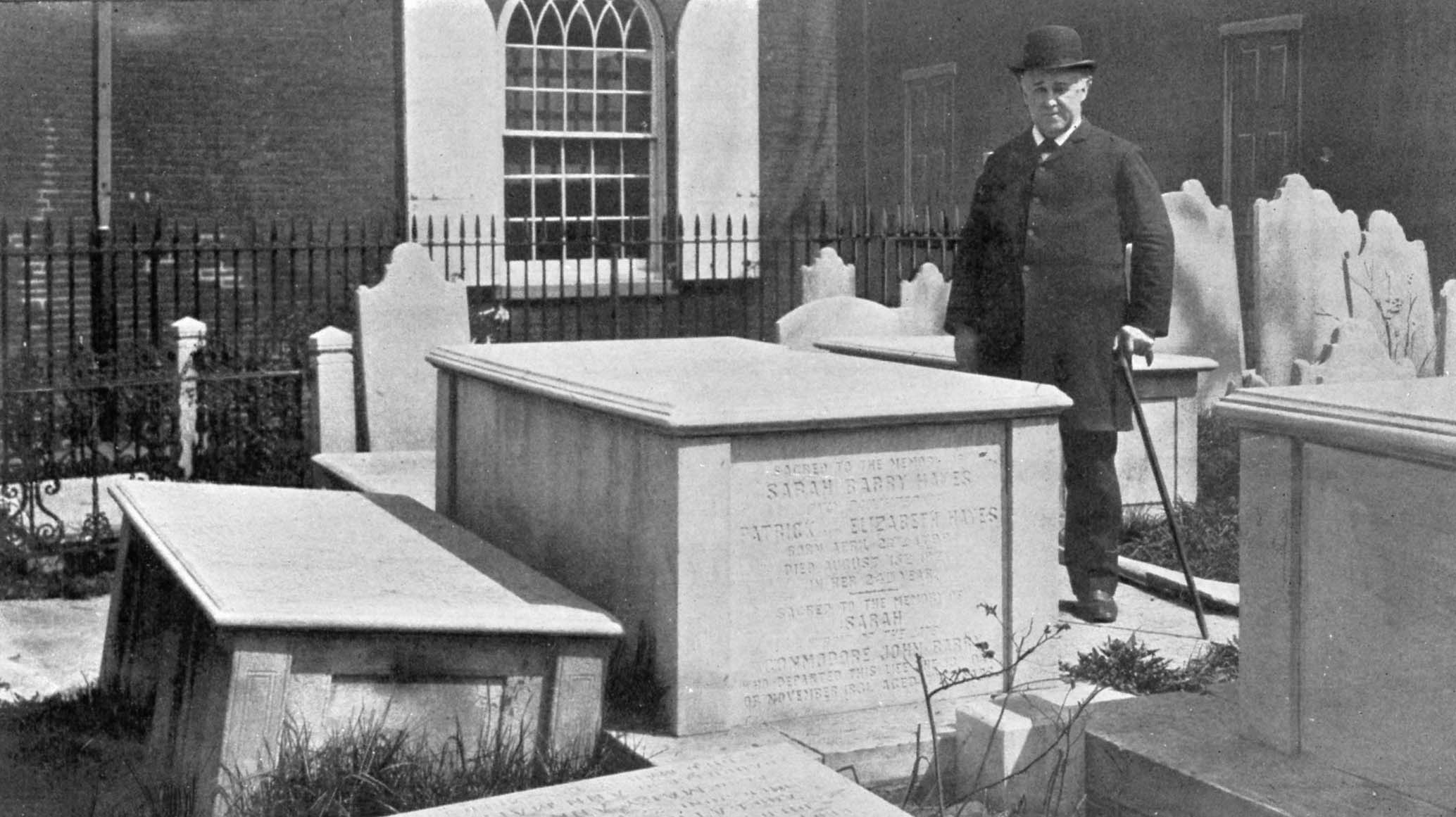
Martin Ignatius Griffin standing next to the grave of Commodore John Barry in the graveyard of Old Saint Mary's.
After the war, Barry continued his naval service under the newly formed United States government, including sailings to China, helping to open trade. In 1794, President George Washington appointed him as the senior officer of the reestablished U.S. Navy, elevating him to the rank of Commodore and making him its first flag officer. This is why Barry is often regarded as the “Father of the American Navy.” In this role, he helped lay the institutional foundations of American naval power, mentoring future leaders and establishing standards that would endure for generations. John Barry passed away on September 13, 1803 and is buried in the graveyard of Old Saint Mary’s on Fourth Street.
In his personal life, John Barry married Mary Clary at Old St Joseph’s Chapel in Philadelphia on October 31, 1767. Sadly, tragedy struck with her premature death following a brief illness at the age of twenty-nine on 9 February 1774. Only twenty-nine, John Barry found himself a widower until he married Sarah Keen Austin in July 7, 1777. Sally was an Episcopalian, who eventually converted to Barry’s Roman Catholic faith. They had no children of their own but happily reared two boys from John’s deceased sister Eleanor: Patrick and Michael Hayes.
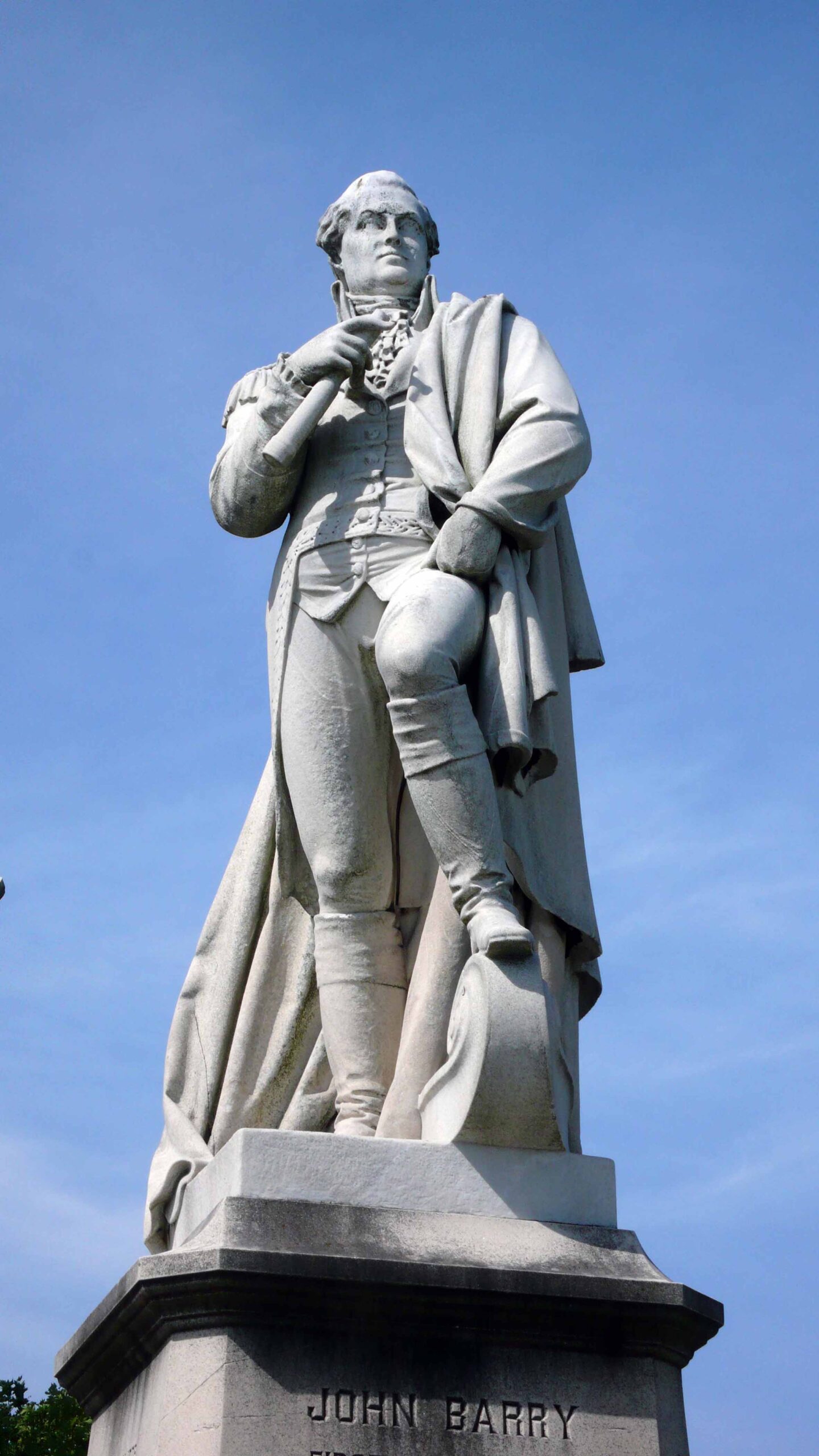
Statue of Commodore John Barry at the Catholic Total Abstinence Union Fountain, designed by Herman Kirn in 1876 for the Centennial Exposition.
Barry’s Catholic faith, while not always publicly emphasized, played an important role in shaping his character. In a period when anti-Catholic sentiment lingered in many parts of American society, his rise to prominence challenged prevailing stereotypes. He maintained close ties with the Catholic community in Philadelphia, including St. Mary’s Church, and supported fellow Catholics in both spiritual and practical ways. Importantly, Barry’s service helped pave the way for broader acceptance of Catholics in the new nation. His loyalty to the revolutionary cause stood in stark contrast to colonial suspicions that Catholics might favor the British Crown. Instead, Barry demonstrated that faith and patriotism were not only compatible but mutually reinforcing.
John Barry’s legacy is multifaceted. He was a fearless naval commander, a dedicated patriot, and a man of deep faith. But perhaps most significantly, he stands as a symbol of the diverse religious and cultural roots that shaped the United States. His story reminds us that the struggle for independence was not only a political revolution but also a step toward a more inclusive national identity. Today, Barry’s contributions deserve greater recognition—not only for their military importance but also for what they represent. In honoring him, we acknowledge the vital role that Catholic Americans played in the founding of the nation, and we celebrate a legacy of faith, courage, and service that continues to inspire.
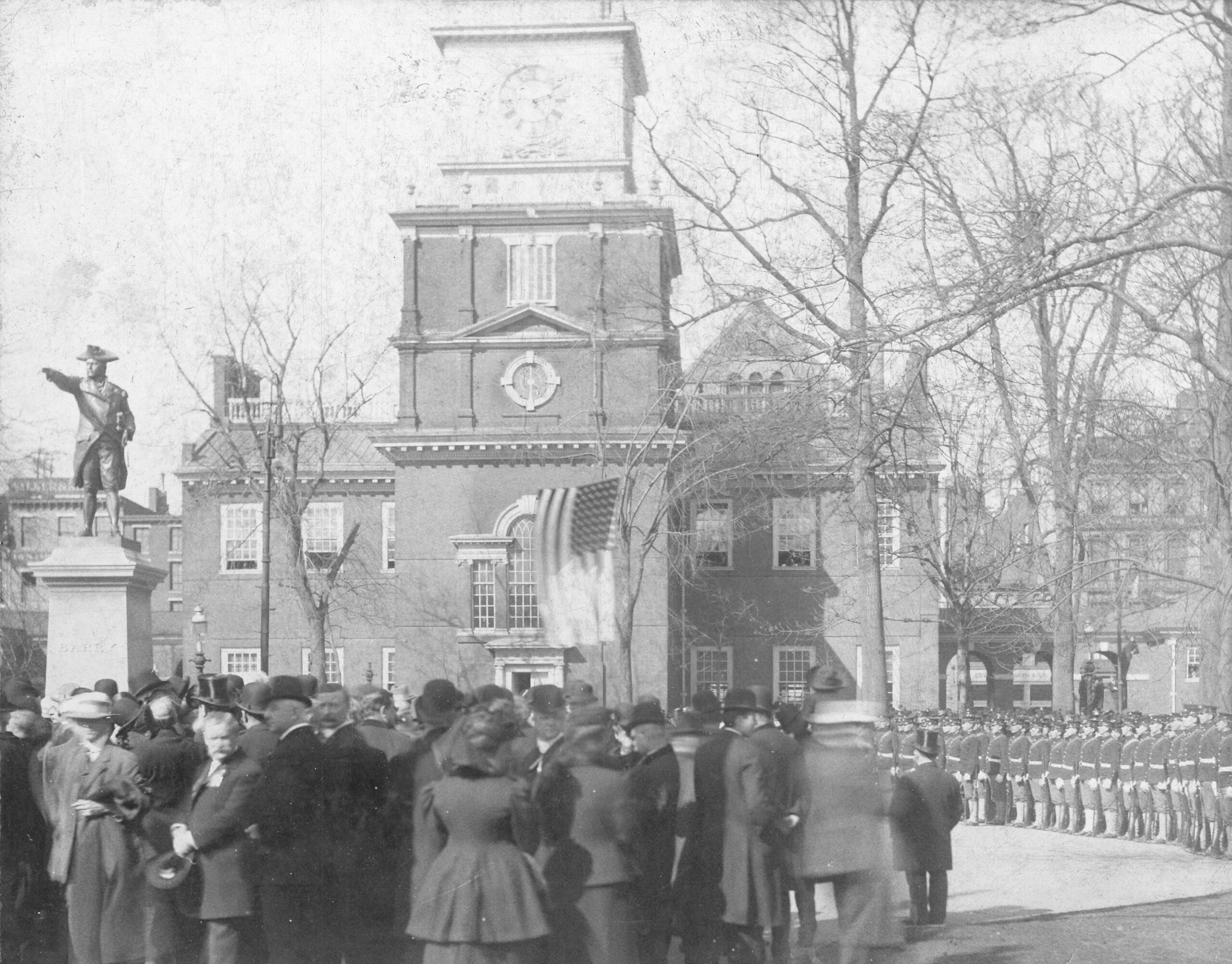
Dedication of the statue of Commodore John Barry by the Friendly Sons of Saint Patrick