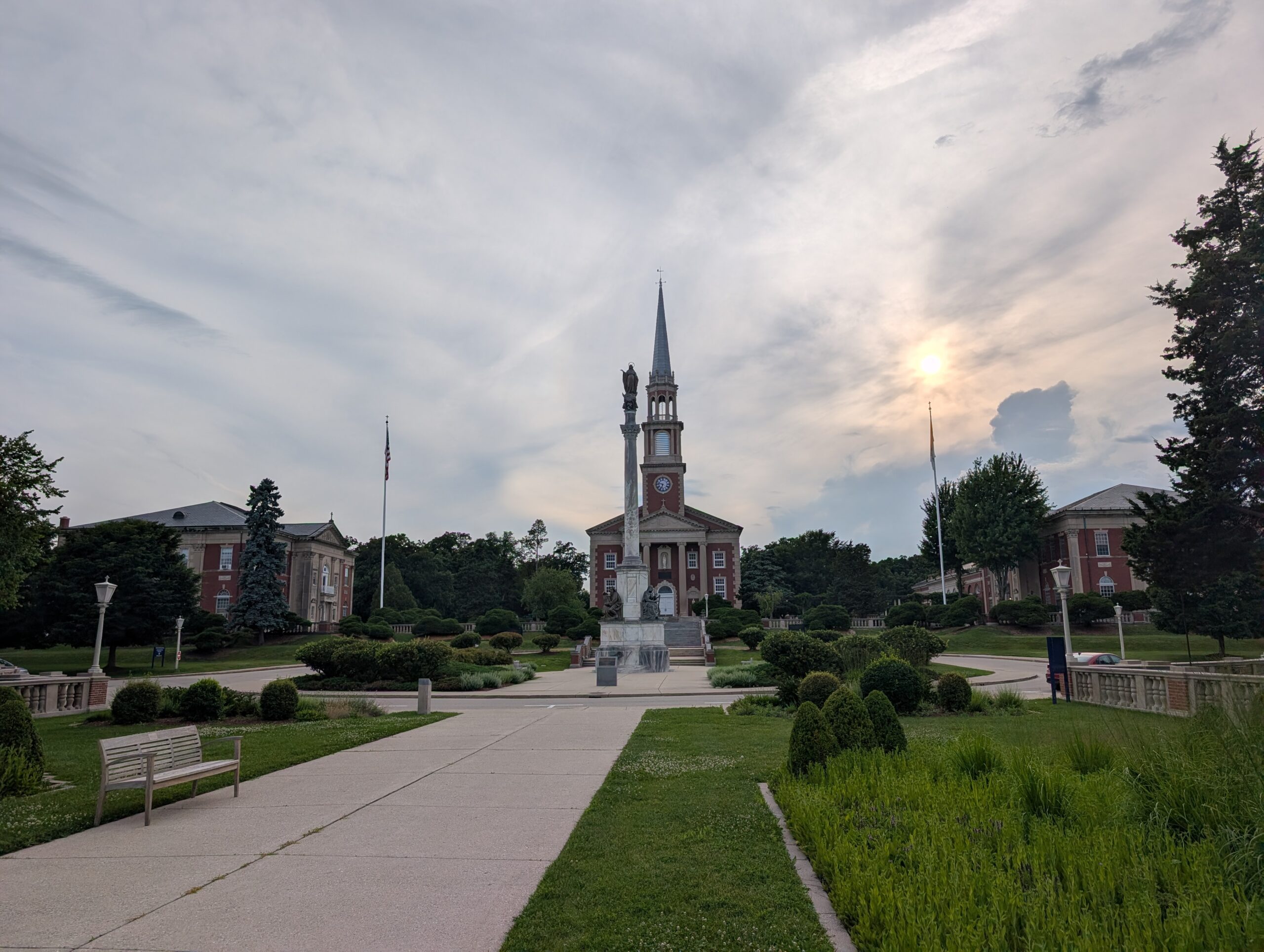
A view of the Chapel of the Immaculate Conception
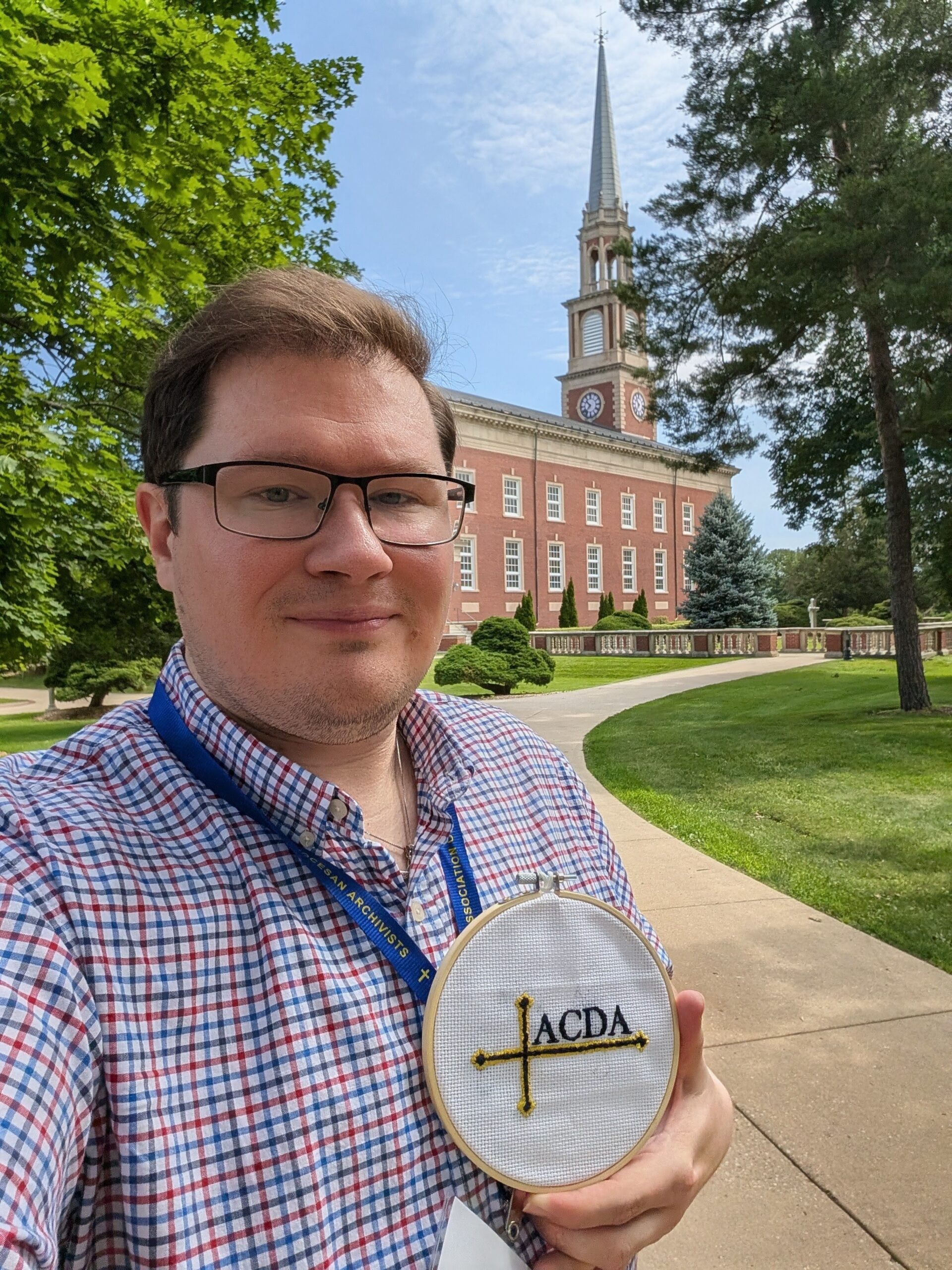
Every two years, both of our archivists step out of the office to attend the Association of Catholic Diocesan Archivists meeting in Chicago. The Association of Catholic Diocesan Archivists traces its origins back to 1974, just before the bicentennial year of 1976. At the time, the United States Conference of Catholic Bishops issued the document “A Document on Ecclesiastical Archives,” a foundational text that established standardized guidelines for preserving and organizing Catholic historical records in the United States. It urged every diocese and religious order to appoint qualified archivists and maintain accessible, systematic record-keeping systems. Even though the 1917 Code of Canon Law mandated the creation of diocesan archives, there were not many in existence in the United States, and some did not have properly trained archivists. In 1978, while at the Society of American Archivists meeting in Nashville, there was a discussion about the creation of a national organization for diocesan archivists. Thus, the Association of Catholic Diocesan Archivists was formed, with their first official meeting taking place in 1979 at the Bergamo Center in Dayton, Ohio. Since 1998, the conference has been held at the University of Saint Mary of the Lake, which is the primary seminary and school of theology for the formation of priests in the Archdiocese of Chicago.
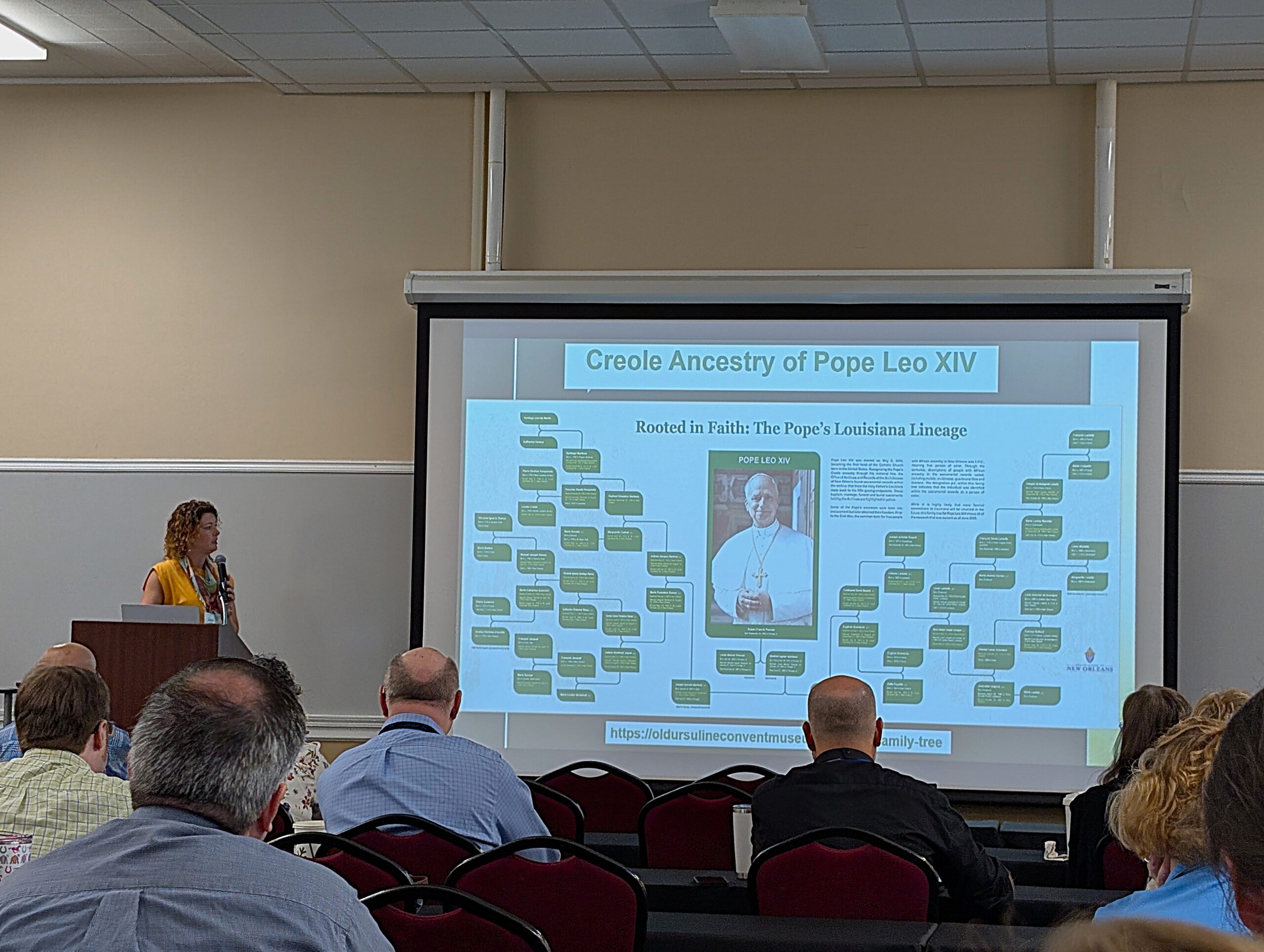
Archivist Sarah Waits of New Orleans show the family tree of Pope Leo XIV
The theme of this year’s conference was “Unsilencing the Archives: Illuminating Voices and Collections,” and discussed topics on how archivists can make their collections discoverable and useable. The keynote address was given by Sergio Gonzalez, Associate Professor of History at Marquette University. He talked about his research into Latino communities in the Midwest and how diocesan archives play a vital role in preserving the voices and experiences of immigrant communities. Another presentation that was timely was “Roots of Faith: Tracing Pope Leo’s Ancestry through Sacramental Records,” given by Sarah Waits, archivist of the Archdiocese of New Orleans. Using sacramental records, Sarah was able to go back several generations to show the multicultural history of Pope Leo through his maternal line. With this information, she was able to create a family tree exhibit at the Old Ursuline Convent Museum. Other topics included exhibit planning for a large space and how to maximize the space in our archives.
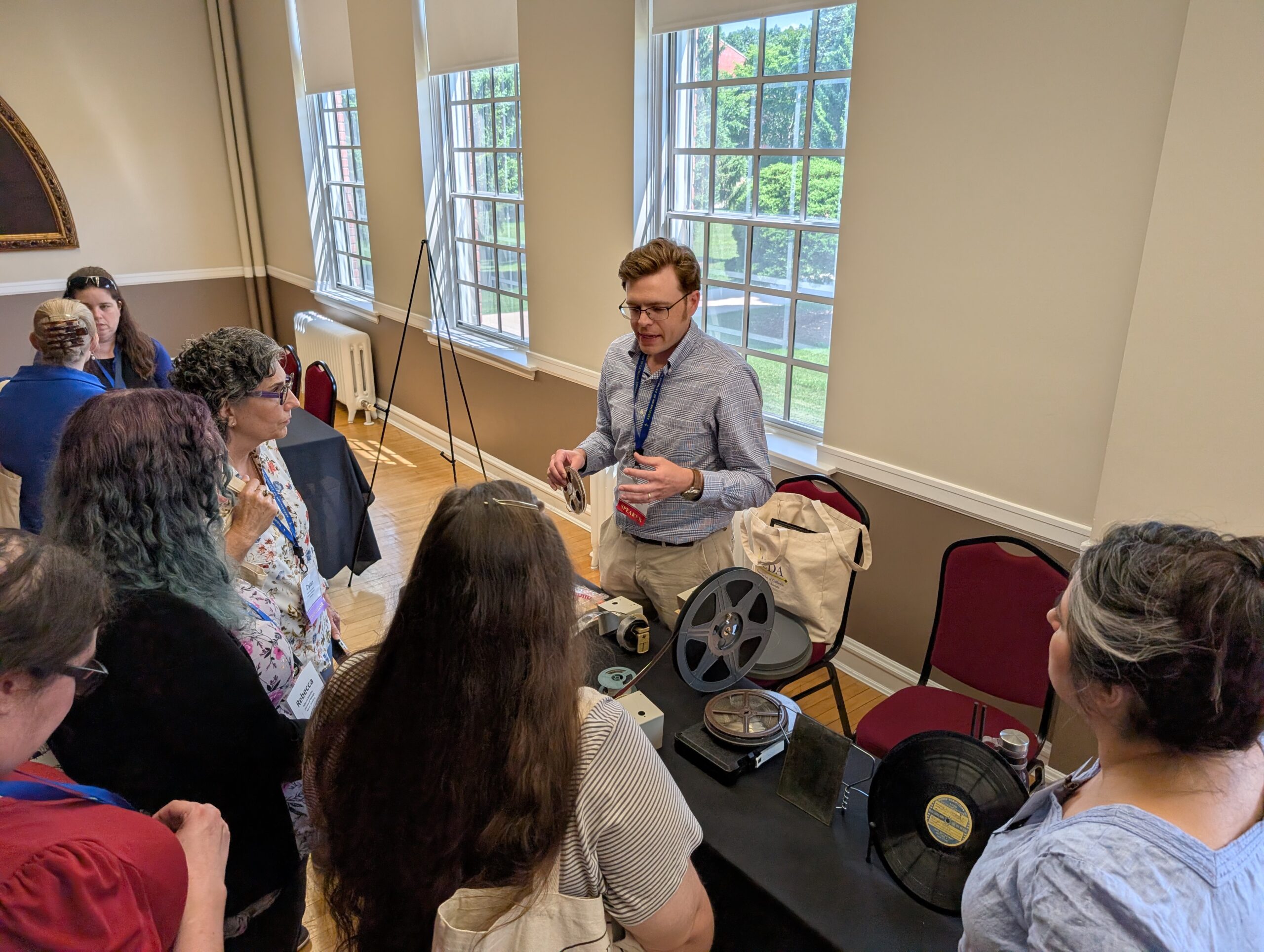
Archivist Patrick Shank during one of the learning labs portion of the conference
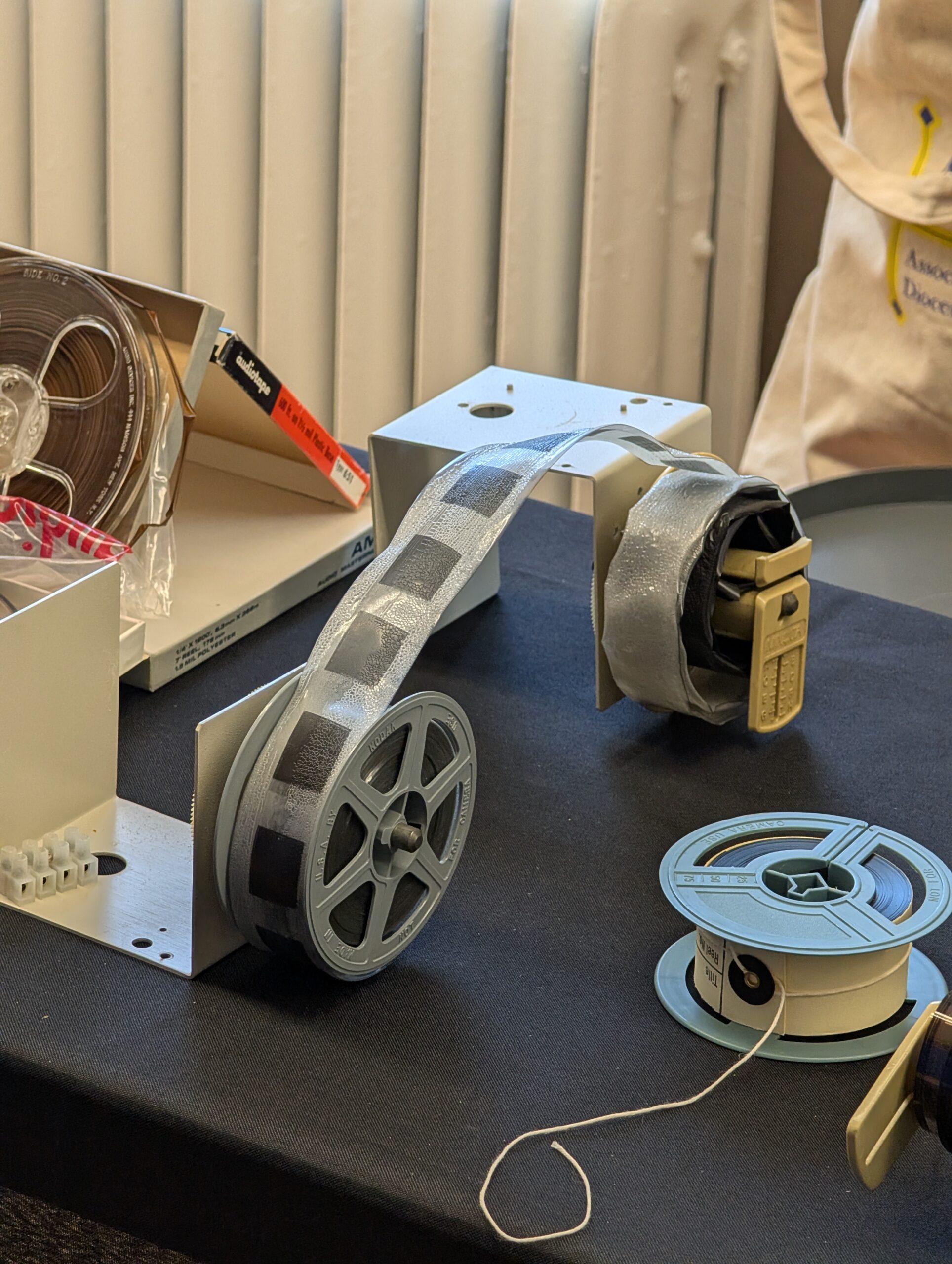
A sample of microfilm affected with vinegar syndrome
At this year’s conference, there was a session where archivists had small areas set up to teach about a certain archival topic called “Learning Labs.” Our Archivist, Patrick Shank, talked about A/V materials, the common problems that they face over time, and the best ways to preserve them. One of the common pieces of materials that we have preserved are sacramental records and issues of the Catholic Standard and Times on microfilm. The common problem that these face is what’s called vinegar syndrome. This is when cellulose acetate film breaks down, causing the film to become brittle and to release acetic acid, producing a vinegar smell. To slow this process, Patrick discussed a few ways to curb the effects, such as freezing the film or storing them in a low-humidity setting. Another solution would be to digitize the film. He also talked on ways to properly store other forms of media such as VHS, cassettes, and Betamax.